TRUST AS CITY STRATEGY
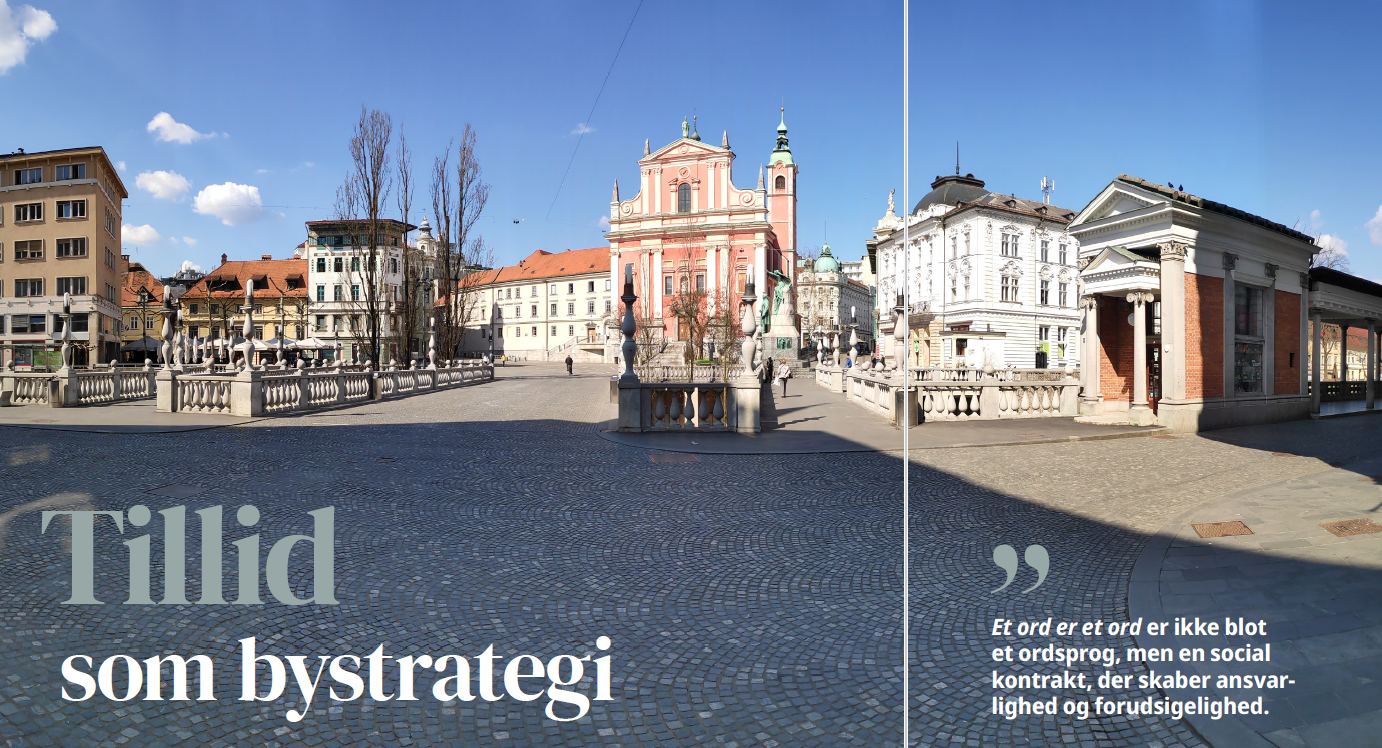
Urban planning can actively strengthen trust and communities by creating physical settings where people meet. Through open public spaces, shared functions, and social activities, relationships emerge that make societies more resilient and collaborative.
In the article “Trust as a City Strategy”, published in Byplanlab Nyt, Helle Juul, together with Lars V. Johannsen and Gert Tinggaard Svendsen, argues that future urban development should integrate social considerations with physical planning. Trust is not merely a result of well-functioning societies—it is something that can be designed, supported, and developed through deliberate choices in urban space.
Trust is understood as a key societal resource and part of the social capital that enables cooperation and reduces the need for control. In this respect, Denmark serves as an example of a high-trust society, where associational life, everyday communities, and physical co-presence play a decisive role.